If you walk through any major city in the world and look up, you’d see glass towers reflecting sunlight, cranes hovering above half-finished developments, and entire districts that get reshaped within a decade. The truth is, the decisions made during design and construction will determine not only energy bills, but insurance premiums, asset valuations, financing terms, and long-term risk exposure.
For decades, buildings were viewed simply as infrastructure. They provided shelter, workspace, and storage. Sustainability was considered an added feature, something admirable but not central to value. That mindset has shifted dramatically. Today, sustainable buildings are increasingly treated as financial instruments.
Institutional investors, pension funds, and sovereign wealth funds are now examining environmental performance with the same seriousness as cash flow projections. Why? Because climate risk is financial risk. Energy inefficiency increases operating costs, and a building that performs poorly environmentally often performs poorly financially over time.
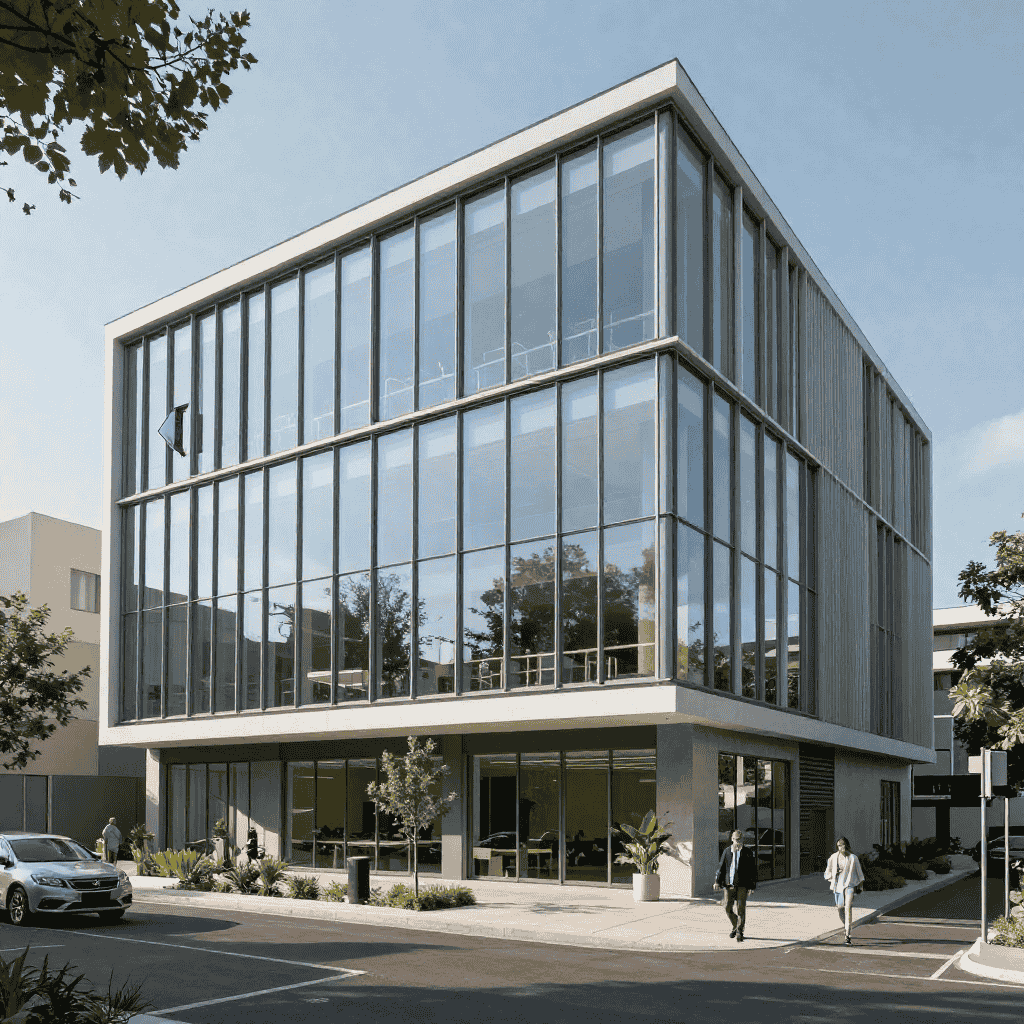
Consider a commercial office building in a dense financial district. Two nearly identical structures sit across the street from each other. One has modern energy systems, water recycling infrastructure, efficient insulation, and verified sustainability certification. The other relies on outdated systems and has no formal sustainability credentials. Over time, tenants gravitate toward the more efficient building because operating expenses are lower and corporate ESG reporting requires measurable sustainability metrics. Investors assign higher value to the certified building because its risk profile is more predictable. Lenders may even offer preferential financing because the asset aligns with green investment mandates.
This is not a theory. Green bonds and sustainability-linked loans have grown rapidly in global capital markets. Banks are under pressure to reduce exposure to carbon-intensive assets. Real estate portfolios that fail to meet environmental standards are increasingly seen as stranded assets in waiting.
Certification plays a critical role in this shift. It transforms sustainability from a vague promise into measurable performance. It provides third-party validation that design and construction decisions align with international benchmarks. For investors and regulators, verified performance reduces uncertainty. And in finance, reduced uncertainty often translates into lower cost of capital.
The conversation has moved beyond “Is this building environmentally friendly?” to “How does this building perform under future regulatory, climate, and market conditions?” Sustainable construction is becoming a hedge against volatility.
In emerging markets, this shift is particularly important. Rapid urbanization means infrastructure built today will shape economies for generations. If that infrastructure locks in high emissions and inefficiency, the financial consequences compound. Conversely, sustainable construction can create assets that remain competitive in a low-carbon global economy.
When businesses pursue credible sustainability certification, they are not merely improving environmental performance. They are strengthening the financial resilience of their assets. They are preparing for a world where capital flows increasingly reward measurable sustainability.



One Response
Wonderful website. Plenty of useful info here. I’m sending it to some
friends ans also sharing in delicious. And certainly, thank you
to your sweat!